
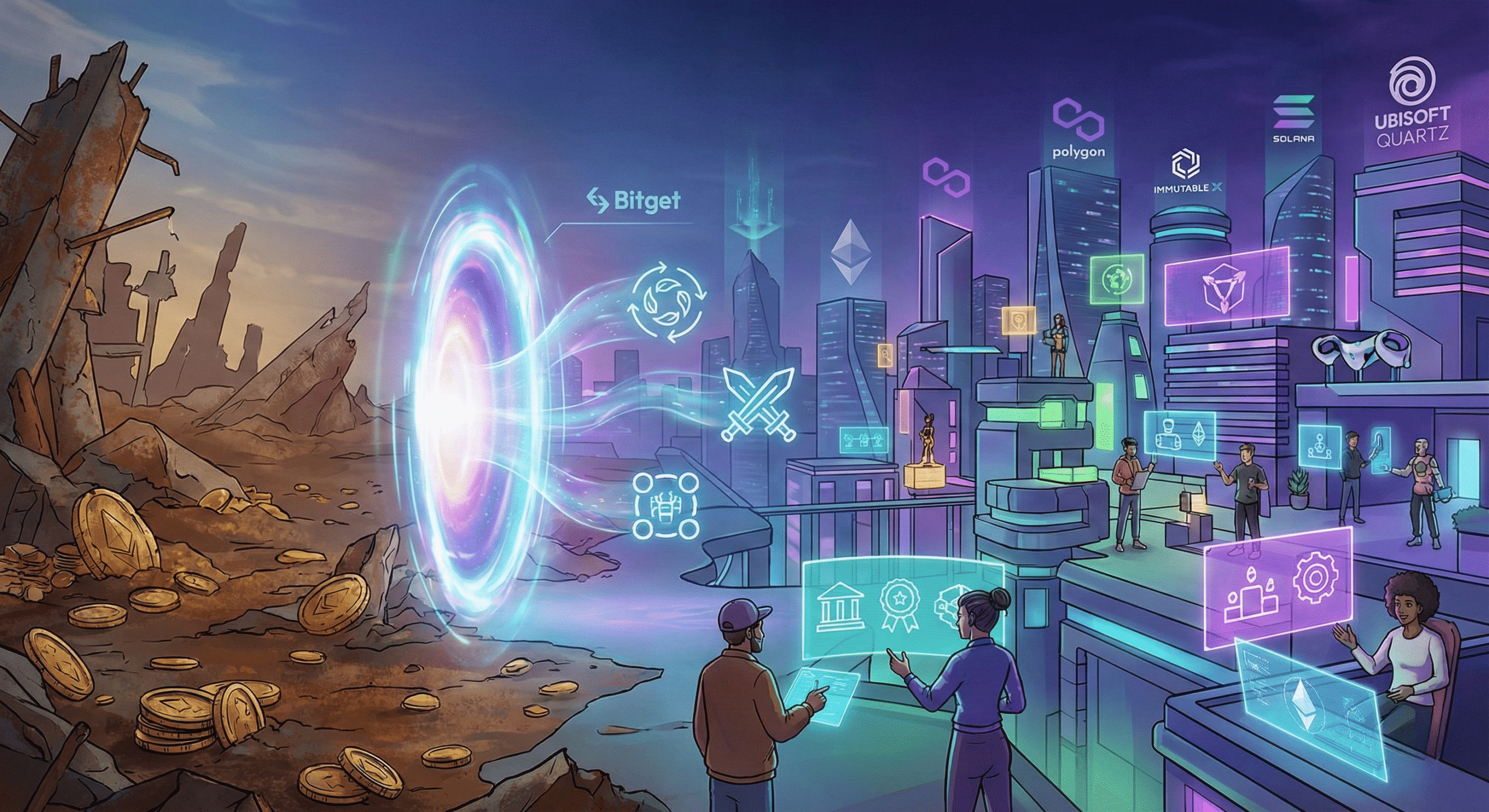
The GameFi sector lost over 60% of its daily active users between Q1 2023 and Q3 2024—a sobering metric that underscores why 2026 is being framed as blockchain gaming’s “reset year.” For blockchain gamers, guild leaders, and indie studios, understanding this pivot isn’t optional—it’s survival. The GameFi market outlook 2026 hinges on whether the industry can shift from speculative play-to-earn mechanics to genuinely engaging gameplay experiences that keep players logging in long after the token hype fades.
The Blockchain Gaming Industry Reset: Why 2026 Matters
The blockchain gaming industry reset isn’t just about recovering lost users—it’s about fundamentally rethinking what makes Web3 gaming sustainable. The early play to earn games model created a gold rush mentality where players farmed tokens rather than enjoyed gameplay. As token prices crashed, so did player retention.
Foundational definition for readers new to GameFi concept: what GameFi is
Looking ahead to the future of GameFi 2026, three critical shifts are emerging. First, studios are prioritizing game design over tokenomics. Second, guilds are evolving from scholarship programs into community-driven DAOs with governance power. Third, platforms like Bitget exchange GameFi are building infrastructure that separates gaming enjoyment from pure speculation.
The GameFi recovery predictions 2026 suggest that projects emphasizing genuine entertainment value, sustainable economies, and interoperable NFT gaming assets will outperform those clinging to outdated earn-first models. This reset demands that players, guilds, and developers ask harder questions: Is this game fun without the financial incentive? Can the token economy survive a bear market? Does the Web3 gaming ecosystem add value beyond speculation?
Blockchain Gaming Trends 2026: Mechanics That Matter
The most promising blockchain gaming trends 2026 revolve around hybrid models that blend traditional gaming excellence with blockchain benefits. Free-to-play entries with optional NFT ownership, skill-based competitive modes where crypto gaming tokens reward mastery over grinding, and cross-chain interoperability that lets players carry assets across multiple games—these are the features gaining traction.
Live data showing current blockchain gaming landscape and trends: gaming dApps rankings
Core Mechanical Shifts
- Skill-Based Rewards: Moving away from time-spent metrics toward competitive achievement systems that reward player skill and strategy
- Sustainable Tokenomics: Implementing token sinks, deflationary mechanisms, and utility beyond speculation to stabilize in-game economies
- Modular Game Design: Allowing players to experience core gameplay without mandatory blockchain interaction, reducing friction for mainstream adoption
- Guild Integration: Native support for guild economies, scholarship management, and collective asset ownership within game infrastructure
- Cross-Platform Assets: NFTs that function across multiple games, creating genuine digital ownership that transcends individual titles
GameFi 2026 vs Traditional Gaming: The Comparison
| Factor | GameFi 2026 Model | Traditional Gaming |
|---|---|---|
| Entry Barrier | Free-to-play with optional NFT purchases | $0-70 upfront or F2P with cosmetics |
| Asset Ownership | True ownership via blockchain, tradeable assets | Licensed access, no resale value |
| Economic Model | Hybrid play-and-earn with deflationary sinks | Publisher-controlled monetization |
| Community Governance | DAO voting on development roadmaps | Developer-dictated updates |
| Interoperability | Cross-game asset usage potential | Siloed ecosystems per publisher |
| Development Speed | Slower due to blockchain integration complexity | Faster iteration cycles |
This comparison highlights the evolving GameFi vs traditional gaming landscape. While traditional games still dominate on polish and accessibility, the best GameFi projects 2025 are closing the quality gap while offering genuine ownership advantages that Web2 can’t match.
Authoritative source for ongoing GameFi sector developments: blockchain gaming news
Industry research supporting GameFi metrics and reset analysis: crypto research reports
Tokenomics Reimagined: Sustainable Play to Earn Models
The play to earn sustainability question has haunted GameFi since Axie Infinity’s peak. The 2026 reset demands tokenomic architectures that don’t rely on infinite new player influx. Successful models now incorporate:
Essential Tokenomic Components
- Dual-Token Systems: Separating governance tokens from in-game currency to stabilize both ecosystems
- Dynamic Reward Scaling: Adjusting earnings based on treasury health and player population to prevent hyperinflation
- Meaningful Token Burns: Tying token destruction to core gameplay loops rather than artificial sinks
- Staking Mechanisms: Rewarding long-term holders while reducing circulating supply pressure
- Real-World Revenue Integration: Incorporating traditional monetization (ads, premium passes) to fund token rewards without Ponzi dynamics
For guild leaders managing scholarship programs, these changes mean scrutinizing project whitepapers with renewed focus on revenue sources beyond token sales. Blockchain game development teams must demonstrate how their economy functions when token prices decline—because they inevitably will.
Context for underlying technology powering blockchain gaming reset: Web3 infrastructure
Ecosystem Impact: Who Wins in the 2026 Reset?
The GameFi investment strategies shifting into 2026 favor several key players. Established studios with gaming pedigree entering Web3 gain credibility advantages. Guilds that evolved into media and community platforms beyond pure scholarships demonstrate resilience. Infrastructure providers offering cross-chain solutions, wallet abstractions, and fiat on-ramps remove friction that killed earlier projects.
Indie studios face both opportunity and risk. Lower barriers to blockchain game development tools democratize creation, but player attention concentrates on fewer, higher-quality titles. The middle tier—projects with moderate budgets but insufficient polish—may struggle most as players demand AAA experiences or genuine indie innovation, with little patience for mediocrity draped in NFT promises.
Pros & Cons: The 2026 GameFi Reality Check
Advantages of the Reset
- Quality Filter: Speculative projects are washing out, leaving teams committed to genuine game development
- Player-First Design: Shift toward fun-first tokenomics-second approach improves actual gameplay experiences
- Mature Infrastructure: Improved wallets, bridges, and platforms reduce technical barriers for mainstream players
- Regulatory Clarity: Emerging frameworks provide legal certainty for studios and investors
- Interoperability Advances: Cross-game asset standards create network effects that increase NFT utility
Challenges Remaining
- Trust Deficit: Previous rug pulls and ponzinomics have tainted GameFi’s reputation with mainstream gamers
- Technical Complexity: Blockchain integration still adds development time and requires specialized expertise
- Market Volatility: Crypto price swings continue disrupting in-game economies regardless of design improvements
- User Experience Gaps: Wallet management, gas fees, and transaction confirmations remain friction points
- Sustainability Questions: Even improved models must prove long-term viability without constant token inflation
Strategic Moves for Players, Guilds, and Studios
For blockchain gamers, 2026 demands selectivity. Prioritize projects with playable demos, transparent tokenomics, and development teams with proven gaming credentials. Don’t invest time or capital based solely on whitepaper promises—demand evidence of engaging gameplay.
Guild leaders should diversify across multiple blockchain gaming ecosystems rather than concentrating on single chains or games. Build community value beyond scholarships through content creation, tournament organization, and governance participation. The guilds that survive become media brands and talent networks, not just profit-sharing schemes.
Indie studios entering GameFi must resist the temptation to bolt blockchain onto mediocre gameplay. Start with a genuinely fun game, then carefully integrate Web3 elements that enhance rather than dominate the experience. Partner with established publishers or platforms to gain infrastructure support and credibility. Most critically, design tokenomics that function even if your token drops 80%—because stress-testing economic models against worst-case scenarios separates sustainable projects from future cautionary tales.
The 2026 reset offers blockchain gaming a second chance to fulfill its promise: genuine digital ownership, player-driven economies, and community governance integrated into compelling entertainment. Whether the industry seizes this opportunity or repeats past mistakes will determine if GameFi becomes a lasting gaming paradigm or a footnote in crypto history.
Got a different data point or thesis? Drop it below and let’s debate the next GameFi move.
Explore related topics: GameFi & P2E, Games, and Gaming tokens.
References
- Coinbase – What is GameFi – Foundational definition for readers new to GameFi concept
- DappRadar – Gaming DApps Rankings – Live data showing current blockchain gaming landscape and trends
- Messari – Crypto Research – Industry research supporting GameFi metrics and reset analysis
- CoinDesk – Crypto News – Authoritative source for ongoing GameFi sector developments
- Ethereum – Web3 – Context for underlying technology powering blockchain gaming reset