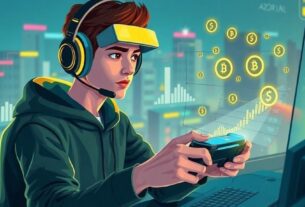
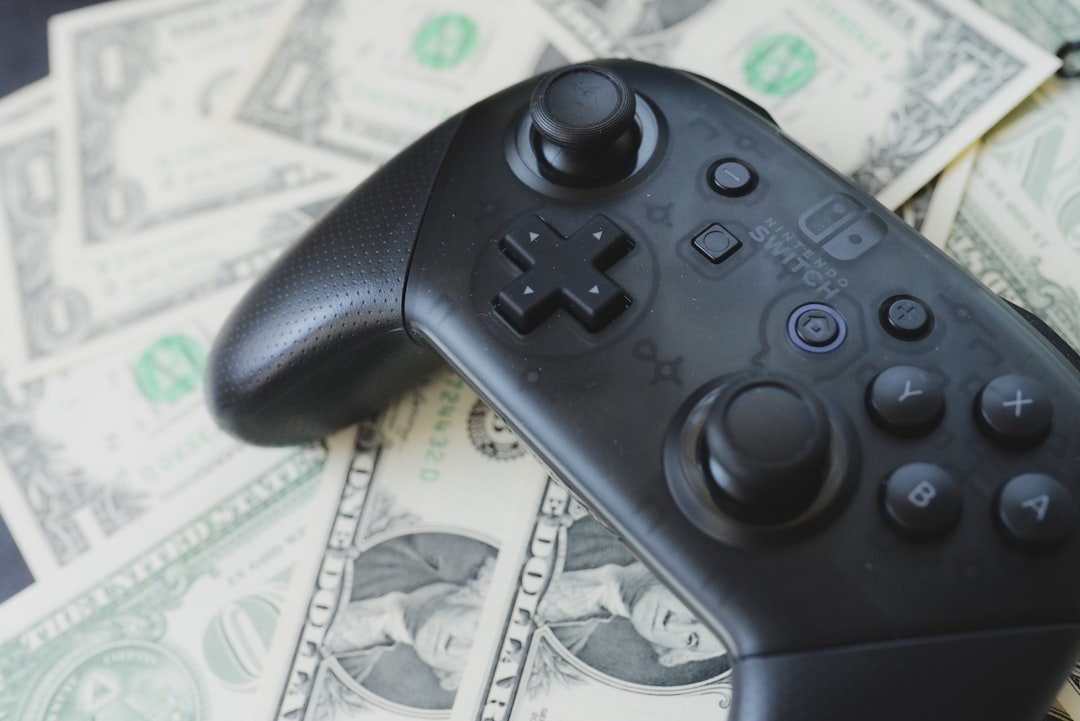
Maria had spent eighteen months building her empire in a popular MMORPG. She’d assembled rare weapons, collected legendary armor sets, and cultivated a digital garden worth thousands of hours of gameplay. Then life changed—a new job, a cross-country move, and suddenly the game that once consumed her evenings felt like a distant memory. When she uninstalled it, everything vanished. Years of investment, gone in seconds. The skins, the gear, the achievements—none of it held value beyond the game’s closed ecosystem. Maria wasn’t just quitting a game; she was walking away from an investment with zero return.
This story repeats itself millions of times across the gaming world. But a fundamental shift is emerging in how we think about digital ownership, sparked by blockchain technology and a simple yet revolutionary principle: players deserve to keep game assets after quitting, retaining real value even when their gaming journey ends.
The Traditional Gaming Trap: When Quitting Means Losing Everything
For decades, the gaming industry has operated on a straightforward model: players spend money, time, and passion on in-game items, but those assets remain locked within the game’s walled garden. Legendary skins in multiplayer shooters, rare mounts in fantasy worlds, exclusive characters in gacha games—all these digital treasures evaporate the moment a player decides to move on.
Explains play-to-earn gaming model and blockchain game fundamentals: GameFi ecosystems
“When someone stops playing a game, they should not lose everything they invested in it,” explains Doron Kagan of Gameplay Galaxy in a recent interview with Pocket Gamer.biz. This statement captures what blockchain gaming advocates have been championing: the concept of permanent ownership gaming assets that transcend any single game’s lifecycle.
Consider the numbers. The traditional gaming industry generated over $184 billion in revenue in 2023, with a significant portion coming from in-game purchases. Players invested this money expecting entertainment, but received no residual value. It’s the equivalent of buying a car that disappears the moment you stop driving it.
The Psychology of Digital Loss
The emotional impact of losing digital investments runs deeper than many realize. Jake, a former professional esports player, shared his experience: “I spent three years grinding in competitive games. When I retired, I had accounts worth thousands in rare items. But I couldn’t transfer that value anywhere. It felt like deleting part of my history.”
This psychological dimension matters because it affects how players approach games. When investments have no exit strategy, player behavior becomes more transactional and less committed. The relationship between player and game remains fragile, built on the understanding that everything ends when the servers shut down or personal circumstances change.
The Blockchain Revolution: True Ownership Meets Gaming
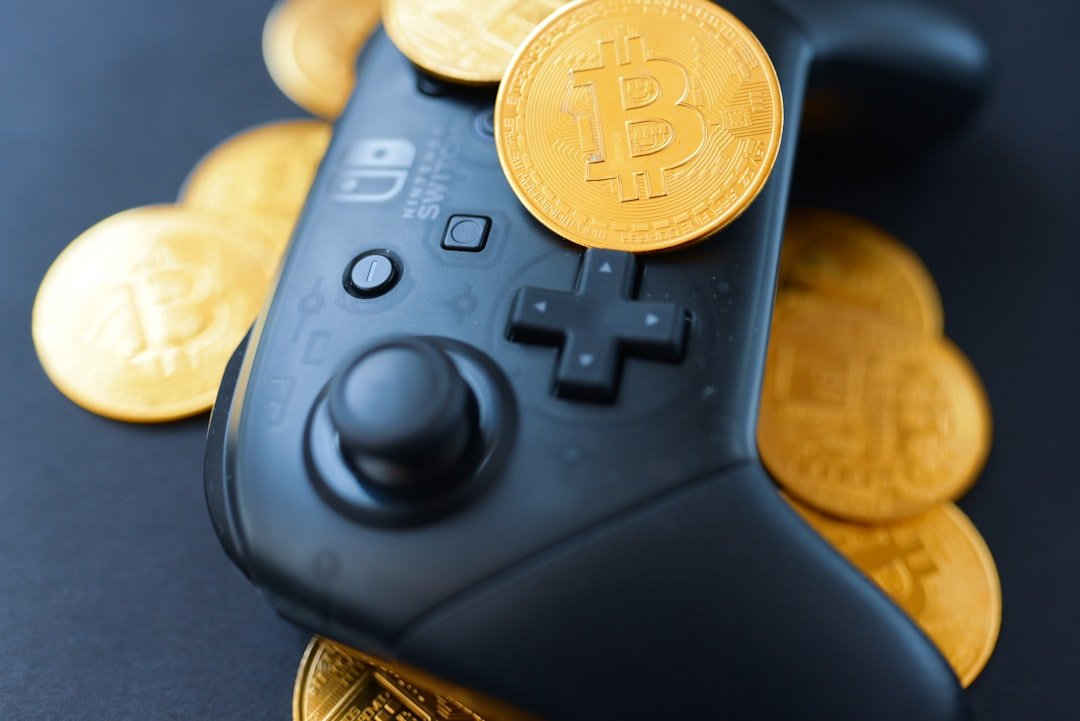
Enter blockchain technology and NFT game asset ownership rights—concepts that fundamentally reimagine digital asset ownership in gaming. Unlike traditional games where items exist only in company databases, blockchain games mint assets as NFTs (non-fungible tokens) on decentralized networks. This technical shift creates something unprecedented: players genuinely own their digital items.
Authoritative financial definition of play-to-earn gaming concepts: GameFi definition
How NFT Gaming Economy Actually Works
The mechanics are simpler than the jargon suggests. When you acquire an item in a blockchain game, you receive an NFT—essentially a certificate of ownership recorded on a blockchain. This certificate exists independently of the game itself. Even if the game’s servers shut down tomorrow, you’d still own the NFT, which could potentially be used in other games, sold on secondary market game items platforms, or simply kept as a collectible.
| Aspect | Traditional Gaming | Blockchain Gaming |
|---|---|---|
| Asset Storage | Company servers | Decentralized blockchain |
| Ownership | License to use | True ownership |
| Transferability | None | Full asset liquidity gaming |
| Value Retention | Zero after quitting | Market-determined value |
| Cross-game Use | Impossible | Potentially supported |
Real Stories of Exit Value in Action
The concept moves from theory to reality when you examine actual player experiences. Take the case of the Phoenix Guild, a collective of 200+ players who coordinated their efforts in Axie Infinity during its 2021 peak. Guild leader Marcus Thompson explained their approach:
“We treated it like a real economy from day one. Members understood that their Axies weren’t just game pieces—they were assets. When some members needed to step back due to school or work, they could sell their Axies and actually recoup their investment, sometimes with profit. That changed everything about commitment and community dynamics.”
The Phoenix Guild’s experience illustrates the practical impact of being able to sell game items after quitting. Members didn’t feel trapped. They engaged more deeply precisely because they knew their time and money weren’t entering a black hole.
Explains decentralized ownership model underlying blockchain game assets: Web3 ownership
Timeline: The Evolution of Digital Ownership in Gaming
Understanding where we are requires examining how we got here:
- 2009-2012: Early experiments with virtual item trading emerge in games like Second Life and Team Fortress 2, but items remain controlled by game companies
- 2017: CryptoKitties launches on Ethereum, demonstrating blockchain-based digital collectibles can generate mainstream interest (and network congestion)
- 2018: First wave of blockchain games launches, mostly simple collection and battle mechanics, establishing NFT gaming marketplace infrastructure
- 2020: Axie Infinity gains traction in the Philippines, demonstrating play-to-earn economics can provide real income in developing economies
- 2021: Massive explosion of GameFi projects; peak valuations; millions of new players explore blockchain gaming benefits
- 2022: Market correction forces industry maturation; focus shifts from speculation to sustainable gameplay and true ownership games
- 2023-2024: Emphasis on quality gaming experiences with integrated blockchain elements; major studios begin experimenting with NFT integration; play to earn vs play to own debate intensifies
Key Milestones: Moments That Defined Ownership Rights
Several watershed moments have shaped the conversation around permanent ownership gaming assets:
Shows real examples of play-to-earn games with rankings: blockchain gaming platforms
1. The Axie Infinity Scholarship Model (2020-2021)
This innovation allowed asset owners to lend their NFTs to players who couldn’t afford entry costs, creating a symbiotic economy. It proved that asset liquidity gaming could build inclusive communities while maintaining value for owners.
2. Major Gaming Publishers Enter the Space (2022)
When companies like Ubisoft and Square Enix announced blockchain gaming initiatives, it signaled mainstream validation. Despite mixed community reactions, these moves legitimized the technology’s potential.
3. The First Cross-Game NFT Integration (2023)
When independent studios began creating ecosystems where items could function across multiple games, it demonstrated the future potential of metaverse asset ownership—true interoperability that makes digital items more like physical possessions.
Demonstrates exit value through actual game asset trading platform: NFT marketplaces
4. Regulatory Framework Development (2023-2024)
As governments worldwide developed clearer positions on NFTs and digital asset ownership, the legal foundation for permanent ownership strengthened, giving players and studios more confidence.
The Guild Perspective: Community Economics Transform Relationships
Sarah Chen leads one of Southeast Asia’s largest gaming guilds, spanning five blockchain games and over 800 members. Her perspective on retain value in blockchain games comes from coordinating complex economic systems:
“The ability to exit with value completely transforms guild dynamics. In traditional games, when members quit, they just disappear—their progress benefits nobody. In blockchain games, departing members can sell assets to incoming players, creating a continuous cycle. We’ve built a mentorship economy where veterans help newcomers, knowing the newcomers might eventually buy their assets when they’re ready to move on. It’s sustainable in a way traditional guilds never could be.”
This guild-level perspective reveals how economic incentives can strengthen rather than corrupt community bonds. When properly structured, the ability to retain value creates intergenerational gaming communities where knowledge and assets both flow to new players.
Studio Challenges: Building for True Ownership
Independent studio Ember Interactive spent two years developing their blockchain RPG “Eternal Realms.” Co-founder David Park shared the unique challenges of designing for permanent ownership:
“Traditional game design assumes you control everything. You can nerf weapons, adjust drop rates, even remove items if they break the game. With true NFT ownership, you lose some of that control. It forced us to think more carefully about balance, longevity, and player investment. But it also made our design better—we had to build systems that could sustain themselves economically, not just extract maximum short-term revenue.”
This constraint actually benefits players. When studios know they can’t simply devalue items through patches or power creep, they must design more thoughtfully. NFT game asset ownership rights create accountability that protects player investments.
The Play to Earn vs Play to Own Debate
As the industry matures, a crucial distinction has emerged between “play to earn” and “play to own” philosophies. Early blockchain games emphasized earning—grinding for tokens and NFTs as if the game were a job. This model proved unsustainable, creating extractive economies that collapsed when new player growth slowed.
The “play to own” philosophy prioritizes actual gameplay and fun, with ownership as a natural benefit rather than the primary motivation. Players engage because the game is enjoyable; the ability to keep game assets after quitting simply adds value to time already well-spent.
This shift matters profoundly. Miguel Rodriguez, a veteran player who experienced both eras, explained: “When I played pure play-to-earn games, it felt like work. Logging in was a chore. With play-to-own games, I actually enjoy playing. The fact that my items hold real value is bonus, not burden. If I quit tomorrow, great—I can recoup some investment. But I’m not playing just to cash out.”
Practical Benefits: Why Exit Value Matters for Every Player
Beyond philosophical arguments, permanent ownership gaming assets deliver concrete benefits:
- Financial Protection: Your gaming budget becomes investment rather than pure expense
- Flexibility: Life changes don’t mean total loss; you can pause gaming without forfeiting everything
- Liquidity Options: Unexpected expenses? Your gaming assets can provide emergency funds
- Collection Value: Items can appreciate over time, especially from discontinued or popular games
- Legacy Creation: Your gaming achievements can be gifted or inherited, not just deleted
- Cross-Game Value: Growing ecosystems allow assets to function in multiple titles
Addressing the Skeptics: Legitimate Concerns
The blockchain gaming space faces valid criticisms. Environmental concerns around energy consumption, speculation that overshadows gameplay, scams and low-quality projects—these issues are real. However, they represent implementation problems, not fundamental flaws in the concept of digital ownership.
Modern blockchain solutions like proof-of-stake consensus drastically reduce environmental impact. Regulatory maturation is weeding out scam projects. And as studios prioritize gameplay over tokenomics, quality is rising. The ability to sell game items after quitting doesn’t require sacrificing gaming quality—it can coexist with excellent design.
The Future: What Comes Next for Gaming Ownership
The trajectory is clear: digital ownership will become standard expectation, not niche feature. Younger players, native to digital environments, increasingly question why virtual items should be less permanent than physical ones. As technology matures and user experience improves, the friction between blockchain benefits and traditional gaming convenience will disappear.
We’re moving toward a future where the secondary market game items operates as smoothly as trading cards or collectibles, where metaverse asset ownership enables seamless identity across digital worlds, and where gaming NFT liquidity makes digital investments as practical as physical ones.
Industry analyst Priya Sharma projects: “Within five years, we’ll see major AAA titles with integrated ownership features. Not because studios love blockchain, but because players will demand it. Once you’ve experienced true ownership, licensed access feels outdated.”
Conclusion: Ownership as
Next steps: Join the conversation: share your take in the comments and invite fellow gamers to weigh in.
Explore related topics: GameFi & P2E, Games, and Market.
References
- Coinbase – What is GameFi – Explains play-to-earn gaming model and blockchain game fundamentals
- Investopedia – GameFi Definition – Authoritative financial definition of play-to-earn gaming concepts
- Ethereum – Web3 – Explains decentralized ownership model underlying blockchain game assets
- DappRadar – Gaming DApps Rankings – Shows real examples of play-to-earn games with rankings
- OpenSea – NFT Marketplace – Demonstrates exit value through actual game asset trading platform